

What to Put in Care Packages for People Experiencing Homelessness
Meta Title: Care Packages for People Experiencing Homelessness
Meta Description: Discover what to include in care packages for people experiencing homelessness, from hygiene kits and warm socks to weather essentials, snacks, and thoughtful personal notes.
Suggested URL: /care-packages-for-people-experiencing-homelessness/
Primary Keyword: care packages for people experiencing homelessness
Secondary Keywords: homeless care packages, essential items for homeless people, hygiene kits for homeless people, Comfort Bags, homeless outreach donations
Introduction: Small Packages, Meaningful Support
A simple care package can make a meaningful difference to someone experiencing homelessness. Everyday necessities that many people take for granted, such as clean socks, personal hygiene products, weather-appropriate clothing, and a convenient snack, can be valuable when access to these items is limited.
Care packages for people experiencing homelessness provide a practical way for individuals, families, businesses, schools, and community groups to turn compassion into action. By bringing together useful supplies in one convenient bag, volunteers can offer immediate assistance while showing that members of their community care.
At The JoyJ Initiative, we believe that even the smallest acts of kindness can help people feel seen, valued, and supported. Through community outreach and initiatives such as Comfort Bags, volunteers can help provide essential items to people facing hardship.
However, an effective care package is about more than the number of items it contains. The most helpful packages are thoughtfully prepared, suitable for the recipient’s circumstances, and assembled with dignity and respect in mind.
In this guide, we explore what to include in homeless care packages, how to select appropriate supplies, and how to work with local outreach organisations to ensure donations meet genuine needs.
1. Essential Hygiene Items for Everyday Needs
Personal hygiene products are among the most useful items to consider when preparing care packages. Access to showers, laundry facilities, and regular supplies can be limited for people experiencing homelessness, making portable hygiene products particularly helpful.
When assembling hygiene kits for homeless people, prioritise practical, unopened products that are easy to carry and use.
Consider including:
- Travel-sized shampoo and conditioner.
- Soap or body wash in sealed packaging.
- Toothbrushes and toothpaste.
- Deodorant.
- Tissues and individually packaged wipes.
- Hand sanitiser, where appropriate.
- Combs or small hairbrushes.
- Period products, where requested and suitable.
- Small packs of toilet paper, where practical.
Choose products that are simple to transport and unlikely to leak. Keep liquids securely sealed and separate them from clothing, paper items, and food.
Whenever possible, select products with mild fragrances or fragrance-free options. Some people have sensitive skin or preferences that make heavily scented products unsuitable.
It is also important to consider accessibility. Packaging that is difficult to open may be inconvenient for someone with limited dexterity, while large containers may be impractical for a person carrying all their belongings.
Before purchasing hygiene supplies in bulk, contact the outreach organisation distributing the packages. It may already have sufficient stock of certain products and a greater need for others.
2. Include Clean Socks and Practical Clothing Essentials
Clean socks are often a useful addition to care packages because they are portable, easy to distribute, and relevant throughout much of the year.
Walking long distances or spending extended periods outdoors can make foot comfort especially important. A fresh pair of socks can provide a practical everyday benefit.
Consider including:
- New socks in commonly requested sizes.
- Gloves during colder months.
- Warm hats or beanies in winter.
- Lightweight caps during sunny weather.
- Rain ponchos during wet seasons.
- Thermal clothing when temperatures drop.
- Other new clothing items requested by the outreach organisation.
Prioritise new, unworn clothing wherever possible, particularly for items that come into direct contact with the skin.
Seasonality matters. A package prepared for a cold New York winter will require different items from one distributed during a warm, humid summer.
During colder months, warm socks, gloves, hats, and other insulating essentials may be appropriate. During warmer periods, lightweight socks, caps, and other weather-suitable items may be more useful.
Avoid including bulky items without first checking whether recipients can comfortably carry them. A donation can be well intentioned but difficult to use if it adds too much weight to someone’s belongings.
The goal is to provide clothing that is practical, comfortable, and appropriate for the conditions people may face.
3. Add Weather-Appropriate Essentials
Weather can influence which items are most useful in a care package. In New York City, for example, people may face freezing temperatures, heavy rain, summer heat, and sudden changes in conditions.
Adapting donations to the season helps ensure that supplies are relevant rather than simply convenient to purchase.
Cold-weather essentials
During winter, consider items such as:
- Warm gloves and hats.
- Thermal socks.
- Hand warmers, if approved by the organisation.
- Emergency blankets, where appropriate.
- Weather-resistant ponchos.
Warm-weather essentials
During summer, useful options may include:
- Lightweight caps.
- Sunscreen in sealed packaging.
- Refillable water bottles, if requested.
- Electrolyte products, where appropriate and approved.
- Lightweight, breathable socks.
Rainy-weather essentials
When wet conditions are common, consider compact rain ponchos, waterproof bags for personal belongings, or other lightweight rain protection.
Always check the safety and suitability of donated products. For example, hand warmers should be used according to their instructions, and any specialised products should be included only when the receiving organisation approves them.
Seasonal planning also helps charities manage limited storage space. By asking what is currently needed, donors can avoid supplying large quantities of items that may not be useful until much later.
4. Include Snacks and Other Suitable Food Items
Food can be a useful addition to care packages, particularly when items are portable, individually packaged, and easy to consume.
However, food donations require careful consideration. Dietary requirements, allergies, access to drinking water, storage conditions, and the availability of meal services can all influence what is appropriate.
Depending on the organisation’s guidance, possible options include:
- Individually packaged crackers.
- Granola or cereal bars.
- Dried fruit.
- Sealed, shelf-stable snacks.
- Other non-perishable food items suitable for the intended recipients.
Check expiry dates and packaging integrity before including food. Avoid products that require refrigeration, cooking, or special preparation unless the receiving organisation confirms that they are suitable.
Where possible, consider common allergens and clearly labelled ingredients. Some snacks contain nuts, dairy, gluten, or other ingredients that recipients may need to avoid.
Bottled water or reusable water bottles may also be useful in some circumstances, depending on the outreach programme’s needs and distribution arrangements.
Food should be selected with practicality in mind. A lightweight snack that can be consumed immediately may be more useful than an item that requires utensils, preparation, or storage.
If an organisation operates a food programme, ask whether it prefers specific products or has established food-safety requirements.
5. Add a Personal Note of Encouragement
Care packages are primarily intended to provide practical assistance, but a brief, thoughtful note can make the experience more personal.
A simple message can communicate kindness without making assumptions about someone’s circumstances or asking them to share their story.
Examples include:
- “Wishing you kindness and brighter days ahead.”
- “You matter, and your community cares.”
- “Sending warmth and support your way.”
- “We hope these essentials are helpful to you.”
- “With kindness from your community.”
Keep messages short, sincere, and respectful.
Avoid language that sounds judgemental, makes promises you cannot fulfil, or suggests that a person’s circumstances are the result of personal failure. Religious messages should only be included when appropriate for the organisation’s approach and the intended recipients.
If several volunteers are preparing packages together, handwritten notes can provide an opportunity for everyone to participate in the project.
At The JoyJ Initiative, we believe that compassion is reflected not only in what we give, but also in how we offer it. A personal note is a small addition, but it can reinforce the importance of treating everyone with dignity.
6. Consider Cultural Differences, Accessibility, and Individual Needs
A thoughtful care package recognises that people have different backgrounds, preferences, abilities, and requirements.
Cultural considerations are particularly important when preparing food, toiletries, and personal care products. Dietary restrictions, religious practices, allergies, and individual preferences can influence whether an item is suitable.
For example, some recipients may avoid particular food ingredients, while others may prefer unscented personal care products. Certain hygiene products may also be more appropriate when selected according to individual needs.
Accessibility is equally important. Packages should be easy to open, carry, and use. Consider the weight of the bag, the size of the items, and whether the contents can be used without specialist equipment.
When possible, offer a variety of suitable products rather than assuming every person needs exactly the same items.
The most effective approach is to ask local outreach organisations about the communities they serve and the supplies recipients have requested.
Care packages should never be used as an opportunity to impose personal beliefs, distribute inappropriate materials, or make people feel obliged to accept assistance.
Respect means recognising that people should have choices wherever possible.
7. Choose Practical Packaging That Is Easy to Carry
The bag itself is another important consideration when assembling homeless care packages.
Choose packaging that is durable, lightweight, and easy to transport. A reusable bag may be appropriate if it is strong enough to carry the contents and practical for everyday use.
When organising items:
- Place liquids in secure, leak-resistant packaging.
- Separate food from toiletries.
- Check that products are sealed and undamaged.
- Avoid sharp objects and unsuitable items.
- Keep the package compact and manageable.
- Ensure the bag can be carried comfortably.
It can also be helpful to group similar items together. For example, hygiene products can be placed in a separate pouch to keep them organised and protect other contents.
Before distributing packages, check each one against the organisation’s approved contents list. Consistent preparation makes distribution easier and helps volunteers identify any missing or unsuitable items.
Remember that more items do not automatically create a better package. A smaller selection of useful, appropriate supplies can be more valuable than a heavy bag filled with products the recipient cannot use.
8. Check With Local Outreach Organisations Before Donating
One of the most important steps in preparing care packages for people experiencing homelessness is speaking with an established outreach organisation before purchasing supplies.
Charities and community groups often have direct knowledge of local needs, seasonal priorities, storage limitations, and distribution arrangements.
They may already receive large quantities of certain products while struggling to obtain other essential items. Checking in advance helps ensure that donations are useful and reduces waste.
Before organising a donation drive, ask:
- Which items are currently most needed?
- Are there restrictions on food, toiletries, or clothing?
- Should products be new and individually packaged?
- Are there specific seasonal requirements?
- How should donations be packaged and delivered?
- Are volunteers needed to assemble or distribute packages?
Working with an established organisation also helps ensure that care packages are distributed through appropriate channels.
If you are based in Manhattan or another part of New York City, consider volunteering with a local charity that already supports people experiencing homelessness. This allows you to learn from experienced teams and contribute to an organised approach.
You can explore opportunities to participate in JoyJ’s work through our Volunteer page.
9. How JoyJ’s Comfort Bags Turn Kindness Into Action
At The JoyJ Initiative, community outreach provides an opportunity to bring volunteers and supporters together around a shared goal: helping people feel seen, valued, and supported.
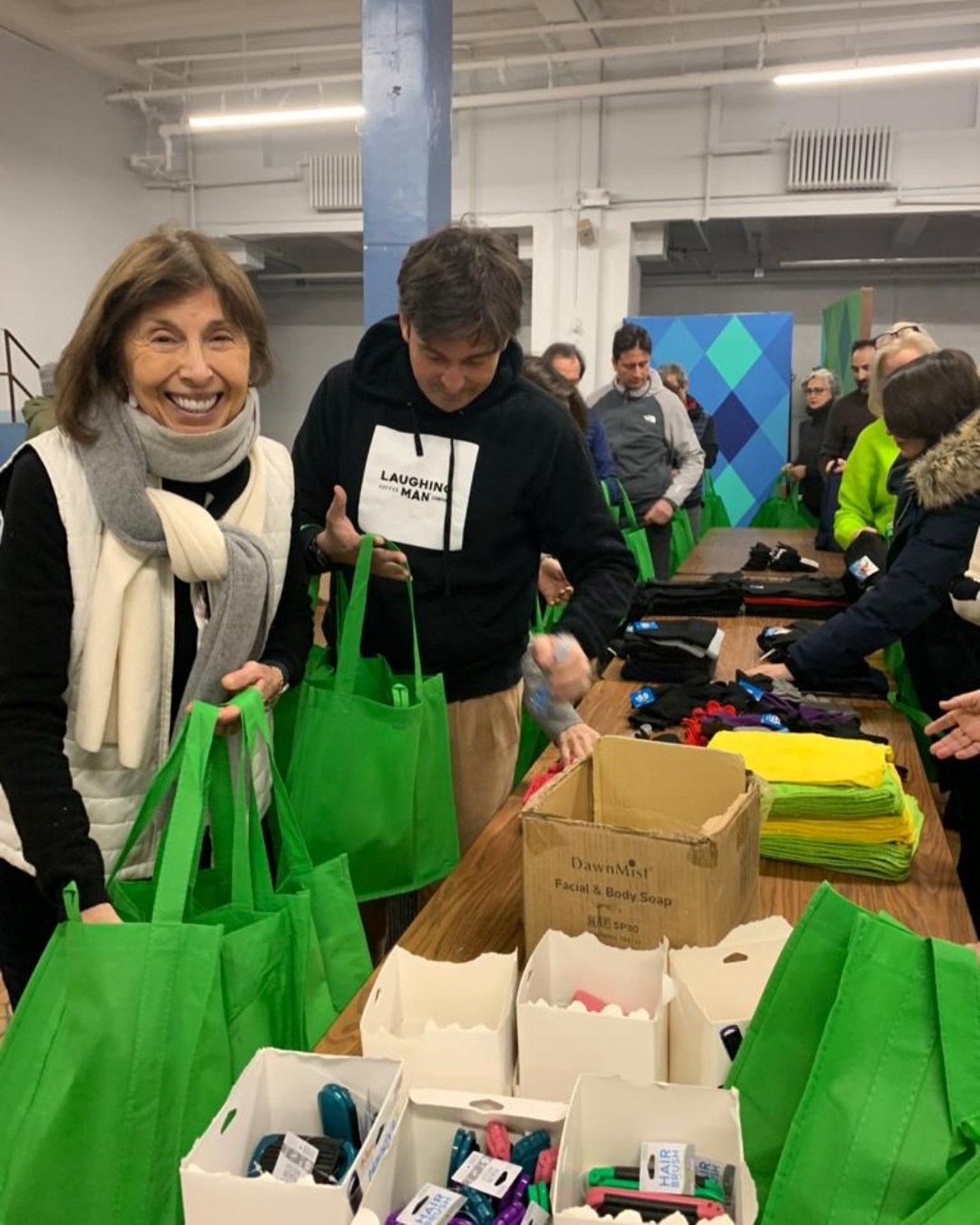
JoyJ’s outreach activities have included preparing Comfort Bags containing food, clothing, toiletries, and gift cards for people experiencing homelessness.
These bags offer a practical way to bring useful supplies together while encouraging volunteers to think carefully about the needs of the people they are supporting.
Preparing Comfort Bags can involve collecting suitable donations, organising supplies, checking products, assembling packages, and coordinating distribution. Each stage provides an opportunity for individuals to contribute.
The initiative also demonstrates how small donations can become part of a larger collective effort. One person may donate socks, another may contribute toiletries, and a volunteer may help assemble the bags. Together, these contributions support a shared community purpose.
To learn more about this approach, visit JoyJ’s community outreach and homelessness support resources. You can also explore our related article on helping people experiencing homelessness in New York City.
Conclusion: Thoughtful Giving Makes a Difference
Care packages for people experiencing homelessness offer a practical way to provide everyday essentials while expressing kindness and solidarity.
From hygiene products and clean socks to seasonal supplies, suitable snacks, and encouraging notes, each item should be selected with the recipient’s needs and circumstances in mind.
The most effective packages are not necessarily the largest or most expensive. They are the ones that provide useful support, respect individual preferences, and are prepared with care.
By consulting local outreach organisations, considering cultural and accessibility needs, and choosing appropriate supplies, donors can help ensure their contributions make a meaningful difference.
At The JoyJ Initiative, we believe that every helping hand matters. Whether you donate supplies, assemble Comfort Bags, or volunteer your time, you can become part of a community that turns compassion into action.
Get Involved With The JoyJ Initiative
Would you like to help prepare care packages or support our community outreach?
- Volunteer: Visit our Volunteer page to explore ways to contribute.
- Support our work: Visit JoyJ.org to learn about our initiatives and available donation opportunities.
- Learn about our mission: Explore the About JoyJ page to discover more about our commitment to community support.
Together, we can provide practical assistance, encourage human connection, and help build a kinder community where everyone deserves to feel seen, valued, and supported.