

How to Help People Experiencing Homelessness in New York City
Meta Title: How to Help People Experiencing Homelessness in NYC
Meta Description: Discover how to help people experiencing homelessness in NYC through respectful outreach, Comfort Bags, essential donations, volunteering, and community support with JoyJ Initiative.
Suggested URL: /how-to-help-people-experiencing-homelessness-nyc/
Primary Keyword: helping people experiencing homelessness in NYC
Secondary Keywords: homelessness outreach NYC, volunteer with homeless people, NYC homeless support, community outreach Manhattan
Introduction: Making a Difference in New York City
New York City is known for its energy, diversity, and vibrant communities. Yet, alongside its many opportunities, homelessness remains a serious challenge affecting individuals and families across the five boroughs. People may experience housing insecurity for many reasons, including rising housing costs, unemployment, family difficulties, health challenges, and unexpected financial setbacks.
While addressing homelessness requires long-term solutions, including affordable housing, accessible services, and sustained community investment, individual acts of kindness can also make a meaningful difference.
Helping people experiencing homelessness in NYC does not always require significant financial resources or specialist experience. It can begin with offering essential supplies, volunteering your time, supporting an established charitable organisation, or treating someone with dignity and compassion.
At The JoyJ Initiative, we believe that everyone deserves to feel seen, valued, and supported. Through community outreach and volunteer-led initiatives, we encourage people to turn compassion into practical action.
Whether you live in Manhattan, work in New York City, or simply want to contribute to your community, there are several meaningful ways to help people experiencing homelessness.
1. Approach People with Respect and Compassion
One of the most important ways to support someone experiencing homelessness is to recognise their dignity and individuality.
Homelessness does not define a person’s character, abilities, or future. Every individual has their own experiences, challenges, and circumstances. Approaching people without judgement helps create opportunities for respectful and meaningful interactions.
If you encounter someone who may need assistance, consider these simple guidelines:
- Ask before offering help. A respectful question, such as “Would you like something to eat or some essential supplies?” allows the person to decide what they need.
- Listen without making assumptions. Avoid assuming that you know someone’s circumstances or what kind of assistance would be most useful.
- Respect personal boundaries. Not everyone will want to talk or accept assistance, and that choice should be respected.
- Communicate naturally. Speak to people as you would to anyone else, without treating them as though their circumstances make them less deserving of respect.
- Protect their privacy. Never photograph or share someone’s story without their informed permission.
Respectful outreach is not about trying to solve someone’s problems in a single interaction. It is about offering support in a way that preserves dignity and recognises personal choice.
A small gesture, delivered with genuine consideration, can help make an interaction more welcoming.
2. Donate Essential Supplies That Meet Everyday Needs
Donating essential supplies is a practical way to contribute to homelessness outreach in NYC.
People experiencing homelessness may have limited access to everyday necessities, particularly when they are navigating public spaces, temporary accommodation, or other uncertain living arrangements. Useful donations can help provide immediate support and make daily life a little more manageable.
Depending on an organisation’s current needs, suitable donations may include:
- New socks and other essential clothing items.
- Travel-sized toiletries and personal hygiene products.
- Sealed, non-perishable snacks and bottled water, where appropriate.
- Hand wipes, tissues, and other useful personal care items.
- Seasonal essentials, such as gloves, hats, and rain ponchos.
- Gift cards that recipients can use to purchase food or other necessities.
Before purchasing supplies, contact the organisation you intend to support. Needs vary by season, location, storage capacity, and the services being provided.
Always check donation guidelines, expiry dates, packaging requirements, and any restrictions on particular items. Avoid donating used personal hygiene products, opened food, or items that are damaged or unsuitable for distribution.
A thoughtful donation is often more useful than a large quantity of items that recipients cannot readily use.
3. Prepare Comfort Bags to Provide Practical Support
Comfort Bags are one way to bring together several essential items in a convenient package.
Rather than distributing individual supplies separately, volunteers can assemble small bags containing practical necessities that recipients can carry easily. These bags can help make essential items more accessible while providing an opportunity to show care and consideration.
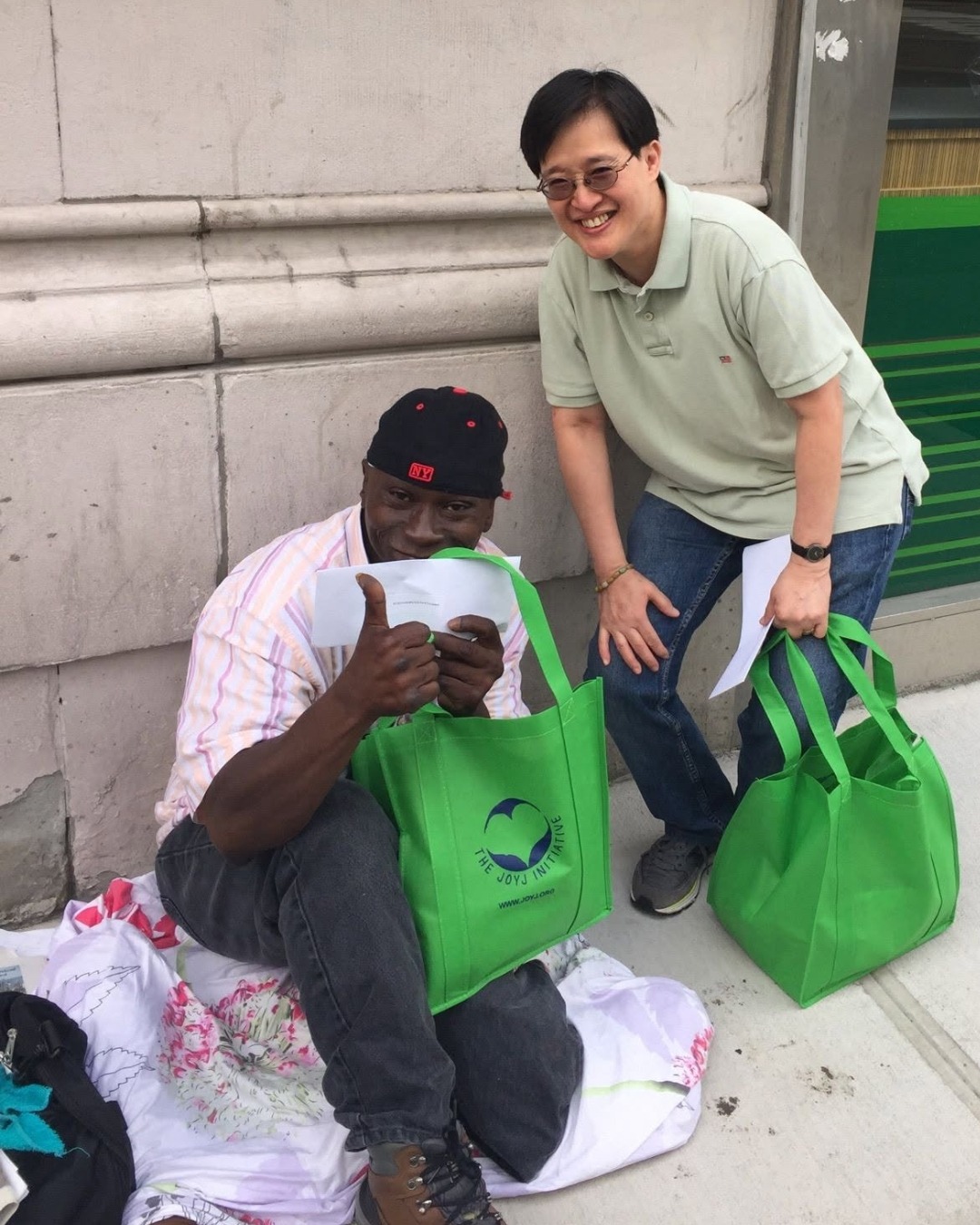
At The JoyJ Initiative, community outreach initiatives have included preparing Comfort Bags containing food, clothing, toiletries, and gift cards to support people experiencing homelessness.
A Comfort Bag might include:
Food and refreshments: Individually packaged, non-perishable snacks or other suitable food items, taking dietary requirements into account where possible.
Personal hygiene: Travel-sized soap, toothpaste, toothbrushes, tissues, and other approved toiletries.
Clothing essentials: New socks, gloves, or other seasonal items appropriate for the time of year.
Additional practical support: A gift card or information about relevant local support services, where available.
The contents should always reflect the needs of the people being supported and the guidance provided by the outreach organisation.
When preparing Comfort Bags, consider accessibility, packaging, and ease of transport. Use clean bags, check that products are sealed and in date, and avoid including items that may be difficult to carry.
It is also important to remember that the bag itself is only one part of the outreach experience. Offering it respectfully, asking whether the person would like to receive it, and allowing them to decline are equally important.
To learn more about JoyJ’s community outreach, visit our outreach projects.
4. Volunteer with an Established Organisation
If you want to make a more consistent contribution, consider volunteering with an established organisation that supports people experiencing homelessness.
Volunteering provides an opportunity to contribute time and skills while learning how community services operate. It can also help ensure that your efforts support existing programmes rather than duplicate services already available.
There are many ways to volunteer, depending on the organisation’s needs and your availability.
You might help assemble Comfort Bags, organise donated supplies, prepare materials for outreach, assist with fundraising, or support community events. Some organisations may also need help with communications, administration, logistics, or volunteer coordination.
Before joining a programme, consider the following:
- Understand the organisation’s mission. Look for a group whose work and approach align with your values.
- Check volunteer requirements. Some activities require orientation, training, background checks, or advance registration.
- Follow safeguarding guidance. Respect confidentiality, boundaries, and any rules designed to protect participants.
- Be reliable. Turning up when expected and completing agreed tasks helps outreach teams plan effectively.
- Commit where possible. Regular volunteering can help organisations build dependable support networks.
The JoyJ Initiative welcomes people who want to contribute to its mission through volunteering and community involvement.
Visit our Volunteer page to explore ways to get involved and learn how your time and skills could support our work.
5. Support Community Outreach Across Manhattan and NYC
Community outreach in Manhattan and throughout New York City can help connect people with practical resources while encouraging stronger neighbourhood relationships.
Outreach initiatives may involve distributing essential supplies, preparing care packages, coordinating volunteers, or raising awareness about the challenges associated with homelessness.
For these efforts to be effective, they should be organised thoughtfully and carried out in cooperation with established organisations wherever possible.
If you are planning to participate in community outreach, start by identifying a local group and asking what support is currently needed. An organisation may already have a schedule, a preferred distribution location, or established procedures for engaging with the community.
Avoid organising an independent distribution in a way that blocks entrances, creates congestion, or puts volunteers or recipients at risk. Respect the rules of churches, community centres, public spaces, and other locations involved.
It is also important to understand that outreach is not a substitute for professional housing assistance, healthcare, or other specialist services. When someone needs support beyond what volunteers can provide, appropriate local service providers may be better placed to help.
JoyJ’s outreach work reflects the value of bringing people together around a shared purpose. By contributing time, supplies, and practical assistance, volunteers can help strengthen the network of community support available to people facing hardship.
Learn more about The JoyJ Initiative and our mission.
6. Remember That Human Connection Matters
When discussing homelessness, it is easy to focus exclusively on food, clothing, shelter, and other material needs. These resources are essential, but human connection also plays an important role in how people experience support.
People experiencing homelessness may encounter social isolation, stigma, or situations in which others avoid interacting with them. Respectful conversations and considerate gestures can help create more welcoming interactions.
Human connection does not mean expecting someone to share personal details, explain their circumstances, or respond positively to an offer of assistance. It means allowing people to participate in an interaction on their own terms.
You can put this principle into practice by greeting someone politely, listening without judgement, asking before helping, and accepting their decisions.
For volunteers, it is also important to maintain appropriate boundaries. You do not need to promise more than you can provide or take responsibility for solving a person’s circumstances independently. Sometimes, the most helpful action is to offer what you can, provide information about appropriate services, or connect with an experienced outreach team.
At JoyJ, we believe that a compassionate community is one in which people are treated with respect regardless of their circumstances.
A bag of essential supplies can meet an immediate need. A respectful interaction can communicate that someone matters. Together, practical assistance and human connection help create a more thoughtful approach to community support.
7. Encourage Others to Get Involved
Helping people experiencing homelessness in NYC becomes a broader community effort when individuals encourage others to participate.
You can share information about volunteering opportunities, organise a donation drive with colleagues, or invite friends and family to support an established outreach initiative.
Businesses can explore employee volunteering, suitable in-kind donations, or fundraising activities. Schools and community groups may be able to organise awareness campaigns or practical service projects, subject to their policies and the guidance of the organisations they support.
When encouraging participation, focus on accurate information and respectful storytelling. Avoid sharing photographs or personal details of recipients without permission, and do not portray people experiencing homelessness in a way that reinforces stereotypes.
Instead, highlight the value of community participation, the importance of essential supplies, and the many ways people can contribute.
Even a simple message encouraging someone to volunteer or donate can help introduce another person to meaningful community service.
How JoyJ Is Helping Turn Compassion into Action
The JoyJ Initiative believes that small acts of kindness can contribute to meaningful change.
Through community outreach and volunteer involvement, JoyJ brings people together to support individuals facing hardship. Activities such as preparing Comfort Bags and distributing essential supplies offer practical ways for volunteers and supporters to contribute.
Our approach is grounded in the belief that compassion should be expressed through action, and that every person deserves to feel seen, valued, and supported.
You do not need to have previous volunteering experience to explore how you can help. What matters is a willingness to contribute, a commitment to treating others with dignity, and a desire to support a more compassionate community.
To learn more about our organisation, visit the About JoyJ page. If you are ready to take the next step, explore our Volunteer page and discover ways to participate in our work.
Conclusion: Every Act of Kindness Counts
Homelessness is a complex issue that requires long-term solutions, coordinated services, and sustained community support. Although individual acts of kindness cannot resolve every challenge, they can provide practical assistance and help foster a culture of empathy and inclusion.
Whether you donate essential supplies, prepare Comfort Bags, volunteer with an established organisation, or offer someone a respectful interaction, your contribution can be part of a wider effort to support people experiencing homelessness in New York City.
The most meaningful help begins by listening, respecting individual choices, and understanding what support is genuinely needed.
At The JoyJ Initiative, we invite you to join us in turning compassion into action. Together, we can strengthen our communities and help create a world where everyone has the opportunity to feel seen, valued, and supported.
Ready to make a difference?
Every helping hand matters. Every thoughtful contribution counts. And every act of kindness is an opportunity to make our community a little stronger.